Are Follower Counts Dead? Why Micro-Influencers Deliver 3X Better ROI (Data-Backed)
![[HERO] Are Follower Counts Dead? Why Micro-Influencers Deliver 3X Better ROI (Data-Backed)](https://cdn.marblism.com/USNCeri8xWS.webp)
Let's settle this once and for all: follower count is a vanity metric: and it's costing brands serious money.
Here's what's actually happening in 2026:
- Brands waste 60% of their influencer marketing budgets chasing high follower counts
- Micro-influencers (10K–100K followers) consistently deliver 3X better ROI than celebrity influencers
- Over 94% of marketers now prioritize engagement rate over audience size
The algorithm has spoken. The audience has voted with their wallets. And if you're still obsessed with follower counts, you're playing yesterday's game.
Why Follower Counts Became the Biggest Lie in Marketing
Remember when everyone thought a million followers meant a million engaged fans? Yeah, about that.
The harsh truth: An influencer with 1 million followers can post to complete silence, while someone with 20,000 highly engaged followers drives actual conversations, clicks, and conversions. According to LTK CEO Amber Venz Box, "2025 was the year where the algorithm completely took over, so followings stopped mattering entirely."
Here's what killed the follower count myth:
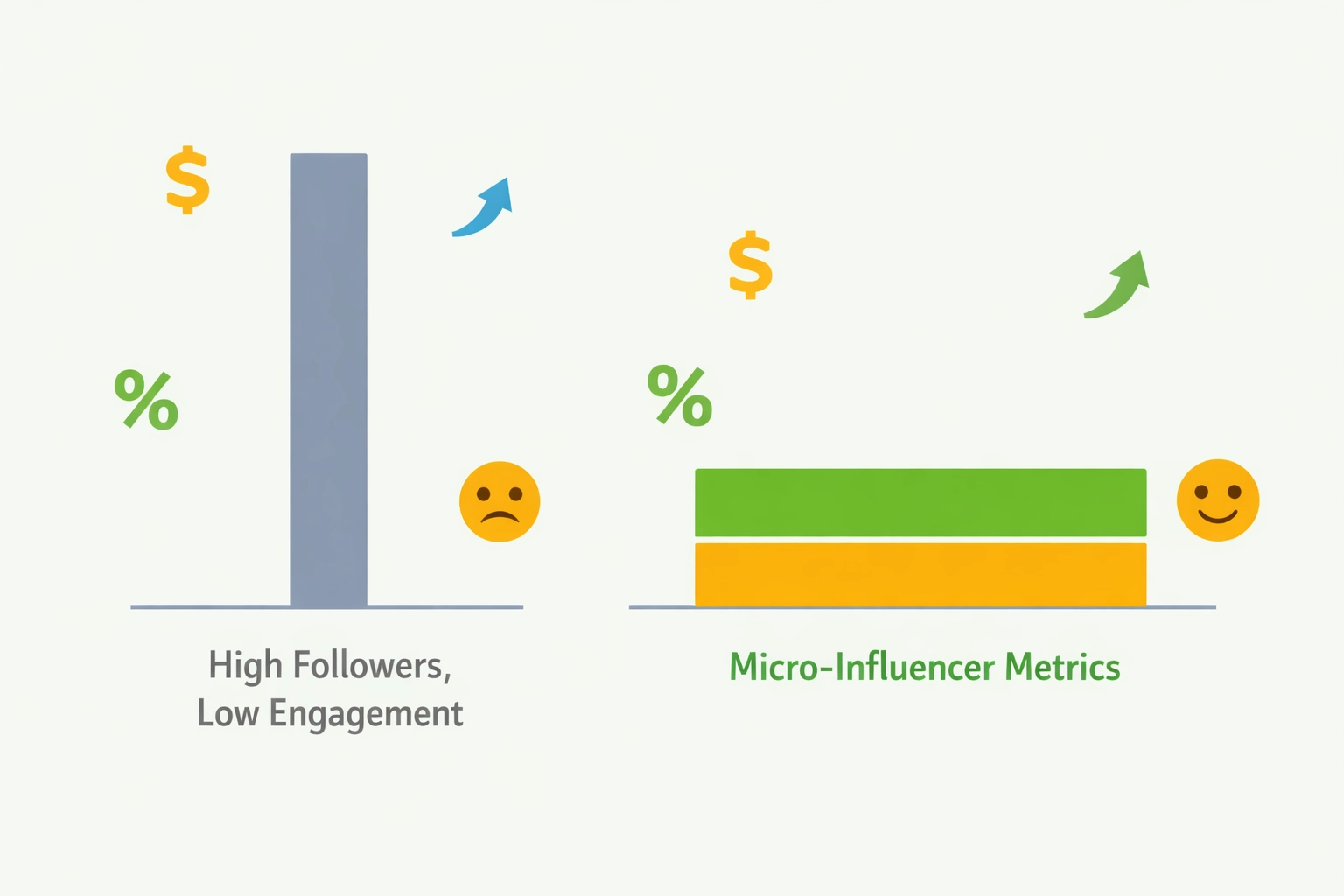
Bot farms and fake followers turned audience size into theater. Brands learned the hard way that 500K followers means nothing when 300K are bots in Bangladesh. The engagement rate tells the real story: and for mega-influencers, it averages a dismal 1.7%. Micro-influencers? They clock in at 3.6% to 8%.
Algorithm shifts prioritize engagement depth: not reach. Instagram, TikTok, and YouTube now push content based on saves, shares, watch time, and meaningful comments. A creator with 15,000 followers who sparks real conversations gets more distribution than a dormant account with a million passive followers.
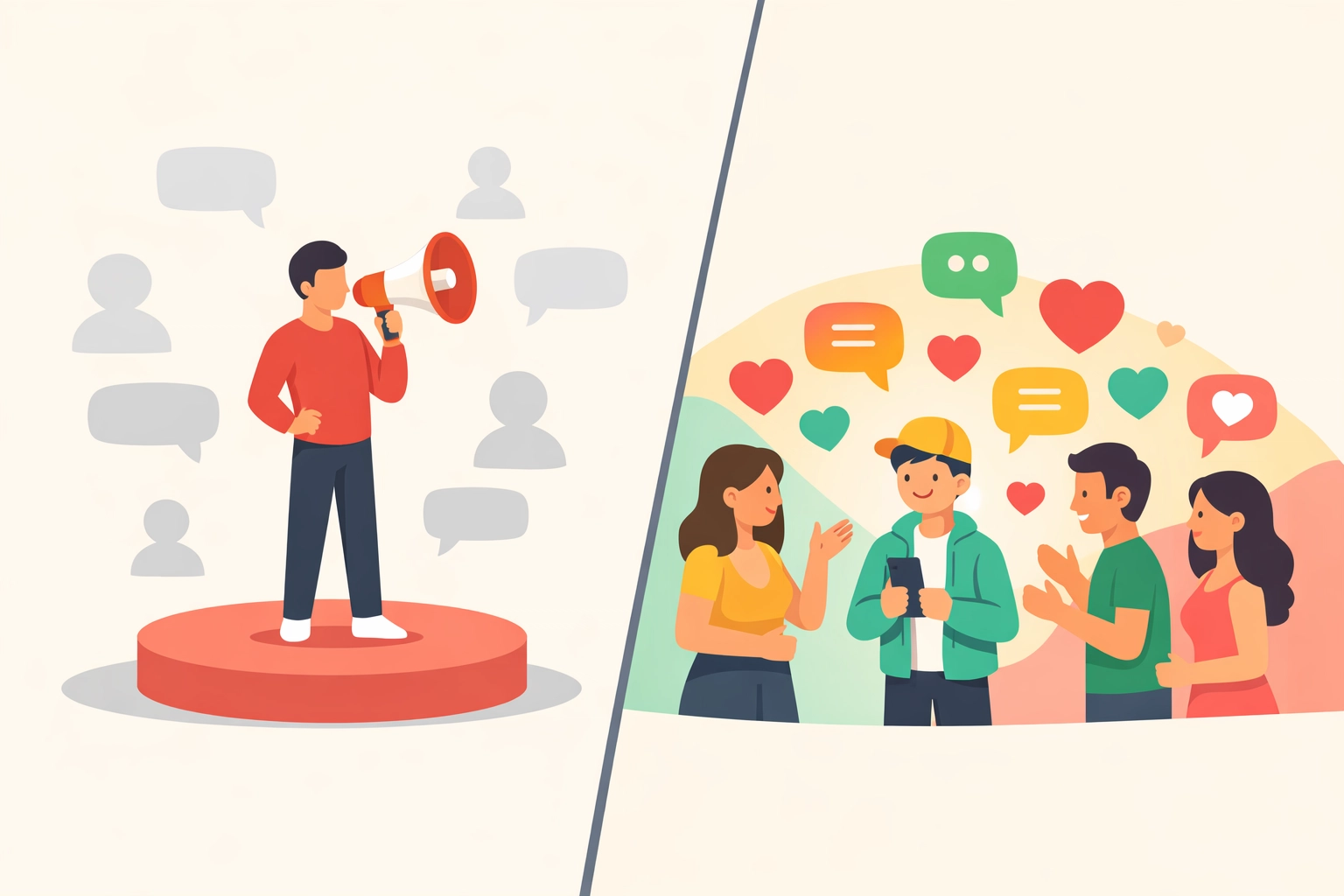
Audiences crave authenticity, and they've learned to spot paid influencer theater from a mile away. When a celebrity with 5 million followers posts a generic skincare routine, nobody believes they actually use it. When a micro-influencer with 30K followers shares their genuine morning routine: complete with the messy bathroom counter: that's the content that converts.
The Micro-Influencer Advantage: Why Smaller Is Bigger
Let's talk numbers that actually matter.
Engagement rates: Micro-influencers average 6% engagement compared to macro-influencers' 1.7%. That's not a small difference: that's a completely different ballgame. When you're paying for eyeballs, you want eyeballs that actually look.
Trust currency: Over 82% of consumers say they're highly likely to follow a recommendation from a micro-influencer, compared to just 37% for celebrity endorsements. Why? Because micro-influencers feel like your friend who happens to have great taste: not a walking billboard.
Niche authority dominates mass appeal. A fitness micro-influencer who posts exclusively about marathon training has way more sway over runners than a general lifestyle influencer with 10X the followers. Specificity wins: every single time.
Here's the kicker: cost per engagement with micro-influencers is 6.7X lower than with macro-influencers. You're not just getting better results: you're paying less for them. That's the ROI math that makes CFOs smile.
Real Data: The 3X ROI Breakdown
Let's break down what "3X better ROI" actually looks like in practice.
Campaign comparison:
- Mega-influencer campaign (500K+ followers): $10,000 investment → 85,000 impressions → 1,450 engagements (1.7% rate) → 23 conversions → $435 cost per conversion
- Micro-influencer campaign (10K–100K followers): $10,000 investment (10 creators) → 350,000 impressions → 21,000 engagements (6% rate) → 189 conversions → $53 cost per conversion
That's not a typo. The micro-influencer approach delivered 8.2X more conversions at a fraction of the cost per result. And because micro-influencers have tighter community relationships, those conversions often turn into repeat customers at higher rates.

The retention factor: Customers acquired through micro-influencer campaigns have a 37% higher lifetime value than those from macro-influencer or celebrity partnerships. Why? Because the recommendation came from someone they genuinely trust: not someone they passively scroll past.
FindCollab's Secret Weapon: FC Score and Aura Levels
Here's where most brands looking for influencers completely miss the point: they search by follower count and call it a day.
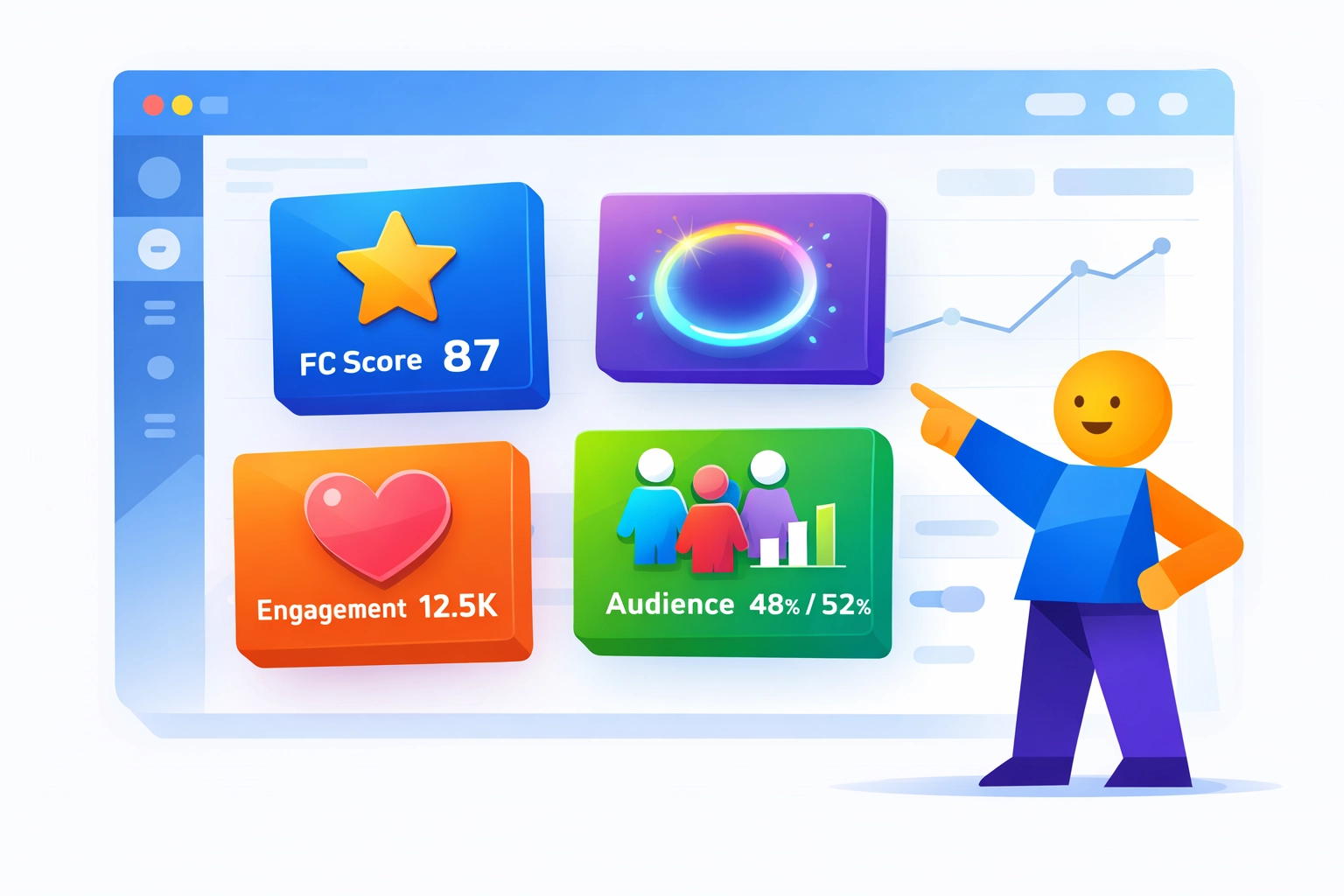
At FindCollab, we built something smarter. Our influencer discovery platform uses two metrics that actually predict campaign success: FC Score and Aura Levels.
FC Score measures genuine influence: not vanity metrics. It combines:
- Engagement quality (not just quantity)
- Audience authenticity (real humans, not bots)
- Content consistency and posting frequency
- Audience demographics and niche relevance
- Comment sentiment and conversation depth
An influencer with 50K followers and a high FC Score will outperform someone with 500K and a mediocre score: every single time.
Aura Levels categorize creators by their influence style and audience relationship:
- Mega Aura: Broadcast reach, celebrity status
- Macro Aura: Wide influence, professional content
- Micro Aura: Niche authority, high engagement
- Nano Aura: Hyper-local, friend-level trust
When you use our influencer discovery tool, you're not just filtering by follower count: you're finding creators whose influence actually matches your campaign goals. Need authentic testimonials? Look for high FC Score Micro Aura creators. Want mass awareness? Macro Aura might be your play.
This is how modern brands find influencers for their campaigns: and why they're finally seeing ROI that makes sense.
How to Find the Right Micro-Influencers (Without the Guesswork)
Let's make this actionable. You don't need a massive budget or a PhD in social media to find influencers for your brand: you just need the right approach.
1. Define your niche with precision. Don't search for "lifestyle influencers": search for "sustainable fashion micro-influencers in urban metros who talk about thrifting." Specificity is your superpower.
2. Prioritize engagement rate over follower count. Use an influencer discovery platform that surfaces creators based on actual engagement metrics: not vanity numbers. FindCollab's filters let you sort by FC Score, engagement rate, and audience authenticity.
3. Check audience demographics. A creator with 50K followers is worthless if their audience doesn't match your target customer. Look at age, location, interests, and purchasing behavior: not just headcount.
4. Analyze content quality and brand alignment. Does their content feel like it fits your brand story? Aesthetic match matters. Scroll their feed. If you can't imagine your product naturally fitting into their content, keep looking.
5. Look for conversation, not just likes. Click into their comments. Are people asking questions? Sharing experiences? Tagging friends? That's the engagement that converts: not passive double-taps.
6. Test small before going big. Work with 3-5 micro-influencers on a pilot campaign before committing your full budget. Measure what works. Then scale the winners.
What Smart Brands Are Doing Right Now
The brands winning at influencer marketing in 2026 aren't chasing follower counts: they're building micro-influencer networks.
They're diversifying creator portfolios: Instead of one $50K macro-influencer, they're partnering with 20-30 micro-influencers at $1K-$3K each. More voices. More niches. Better coverage.
They're treating influencers as long-term partners: One-off posts are dead. Smart brands build ongoing relationships with micro-influencers, turning them into authentic brand advocates who integrate products naturally into their content over time.
They're using data to guide decisions: Platforms like FindCollab give brands the insights to make smart choices: FC Scores, Aura Levels, engagement analytics, and audience breakdowns replace gut feelings with strategy.
They're focusing on saves and shares: Likes are nice. Saves and shares indicate real intent. When someone saves a post, they're planning to buy. When they share it, they're co-signing the recommendation. Those are the metrics that matter.
The Bottom Line: Influence Is the New Currency
Follower counts aren't completely dead: but they're no longer the deciding factor. In 2026, engagement beats reach, authenticity beats celebrity, and trust beats vanity metrics.
The data is clear: micro-influencers deliver 3X better ROI, higher engagement rates, stronger audience trust, and lower cost per conversion. They're not just a budget-friendly alternative: they're often the better strategic choice.
If you're still evaluating influencers by follower count alone, you're leaving money on the table. The brands that win are the ones who use smarter metrics: FC Score, Aura Levels, engagement quality, and audience authenticity: to find creators who actually drive results.
Ready to find influencers who deliver real ROI? Start discovering micro-influencers on FindCollab and see what data-driven influencer marketing actually looks like.
Because in 2026, influence isn't measured in followers: it's measured in trust, engagement, and conversions. And the brands who understand that? They're the ones winning.